Feedstock
Renewable, recovered or bio-based fibres with defined supply, quality and impact evidence.
TEXTILES · FASHION · MANUFACTURING
A Horizon Europe pathway linking Australian materials research, textile manufacturing, fashion, circularity, provenance and place-based value.
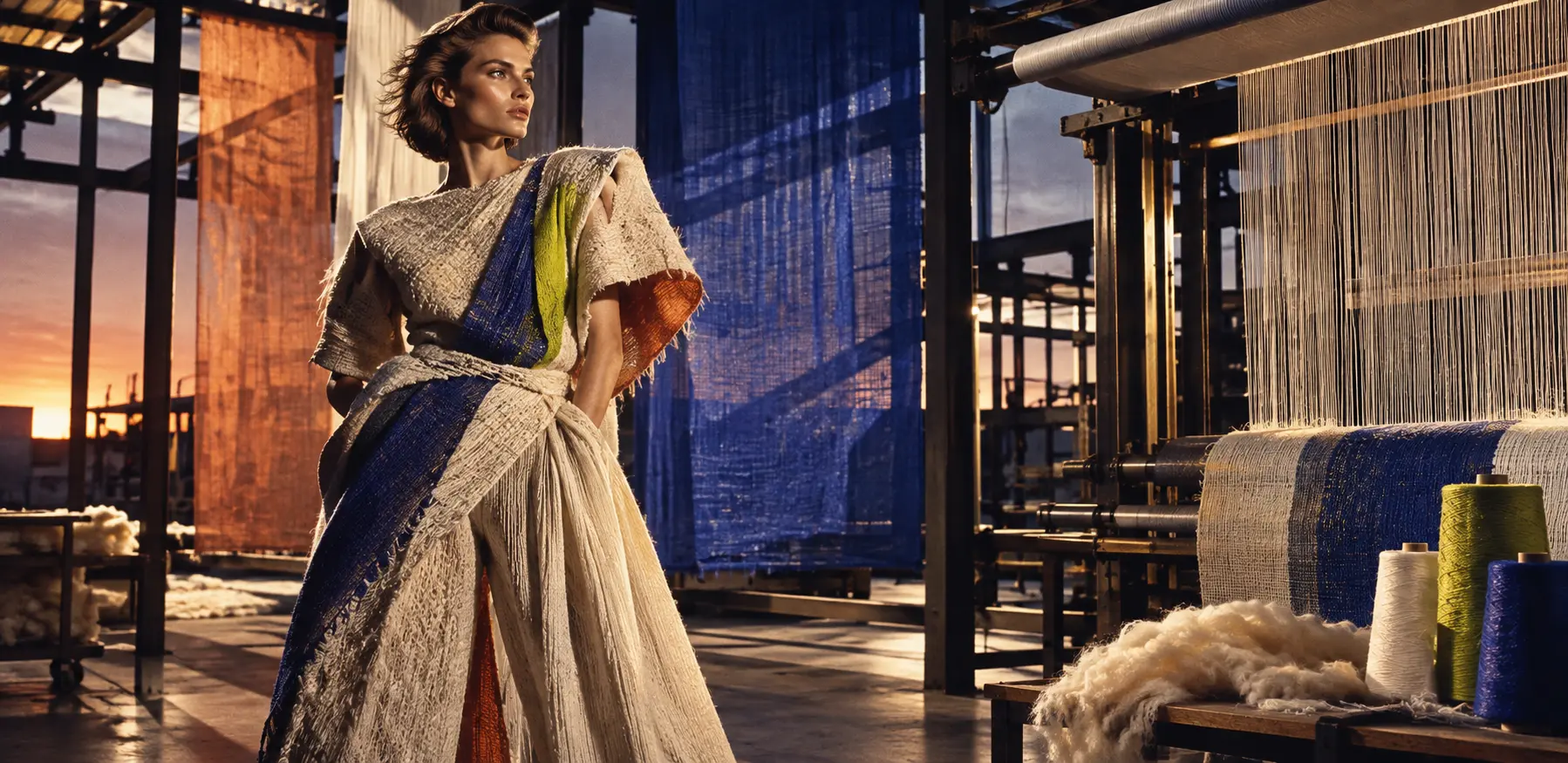
01 / THE PROPOSITION
Australia can contribute more than fibre supply. The stronger proposition connects feedstock to finished cloth, verifies every production stage and creates a credible route to scale.
The proposed Australian node connects fibre formation, spinning, textile development and characterisation with industrial conversion partners, brands and end users, recyclers, data specialists and Australian Crafts Alliance.
Provenance, craftsmanship assessment, repairability and place-linked specifications become the market-adoption layer around a technically rigorous textile demonstrator.
THE FIBRE-TO-CLOTH SYSTEM
Renewable, recovered or bio-based fibres with defined supply, quality and impact evidence.
Process windows, spinning compatibility, repeatability and technical risk.
Weaving, knitting, finishing and application-led performance testing.
Origin, process stages, durability, repairability, craftsmanship and interoperable DPP data.
Buyer validation, cost model, offtake route, producer governance and regional value.
02 / 2027 HORIZON ROUTES
Cluster 4 leads with industrial textile innovation. Cluster 2 leads with craft, culture, design and circular practice.
PRIMARY INDUSTRIAL ROUTE
Best suited to fibre processing, spinning, textile manufacture, industrial validation, quality, cost, circularity and commercial scale.
Official Cluster 4 work programme ↗CULTURAL + CIRCULAR ROUTE
Best suited to craft-led innovation, circular design, fashion and textiles, skills, local production, business models and cultural change.
Official Cluster 2 work programme ↗03 / THE PROPOSED AUSTRALIAN VALUE CHAIN
Fibre formation, spinning, textile development, process windows, performance and technical leadership.
Equipment time, manufacturing data, repeatable cloth production, quality ownership and scale evidence.
Product requirements, trials, procurement or offtake case, user validation and route to market.
Material recovery, feedstock specifications, sorting, cleaning and end-of-life loops.
Verified claims, craftsmanship assessment, producer governance, regional specifications and CIGI readiness.
Identifiers, chain-of-custody records, interoperable data and verified claim exchange.
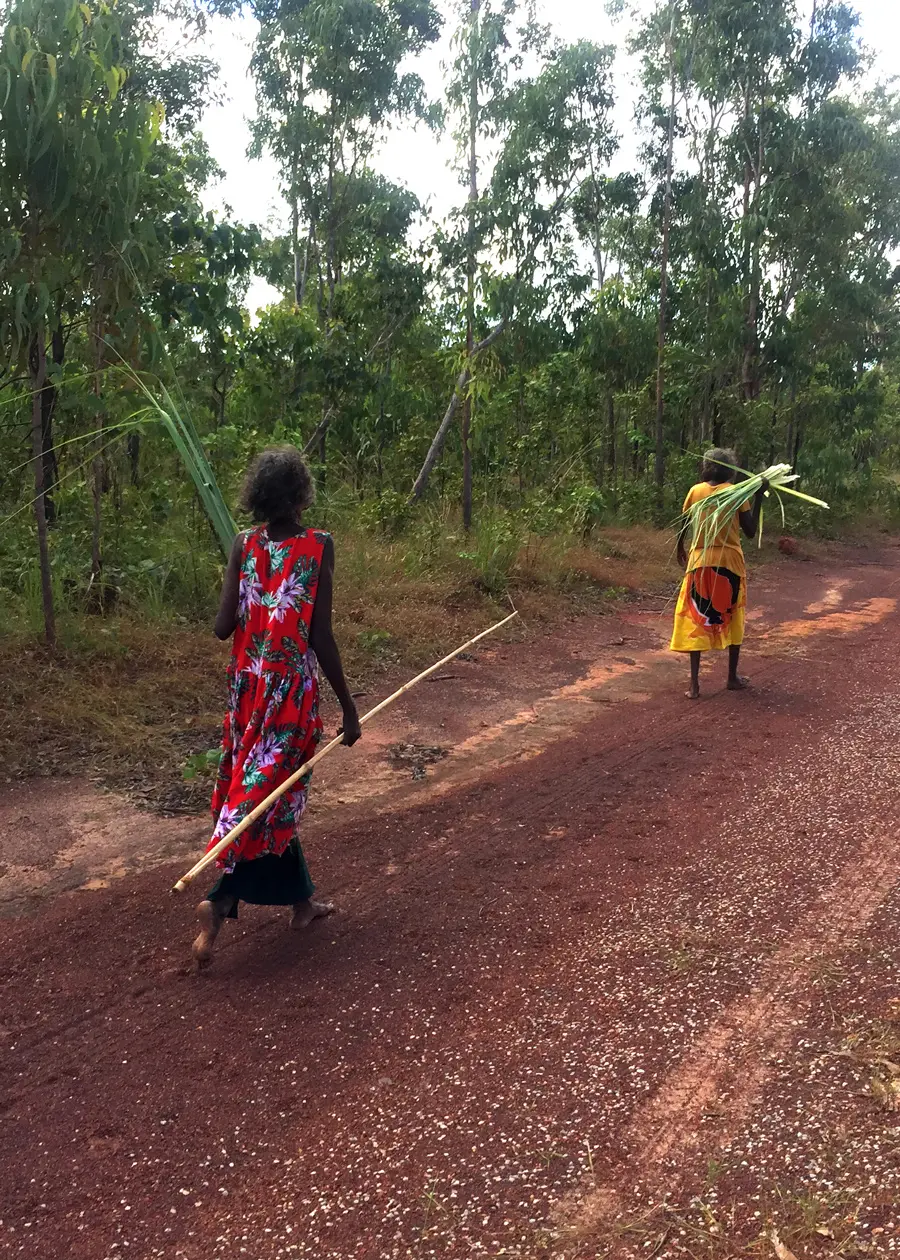
04 / LIVING MATERIALS + CULTURAL AUTHORITY
Australian research partnerships can contribute globally significant expertise in living materials, fibre practices, land-based knowledge and intergenerational transmission.
Consortium design should place First Nations organisations and knowledge holders in defined leadership, governance and benefit-sharing roles, with Indigenous Cultural and Intellectual Property embedded from the beginning.
This creates stronger research, accountable partnerships and a credible basis for long-term collaboration.
05 / EUROPEAN PRECEDENTS
Each project demonstrates a different part of the Australian proposition: industrial recovery, circular garments, value-chain coordination or craft-led transition.
Textile recovery, sensing, digital tools, manufacturing and a real-scale demonstrator.
Read field note ↗ CLUSTER 6Repair, sorting, recycling, circular garments, DPPs and consumer interaction.
Read field note ↗ CLUSTER 6Post-consumer textile waste as feedstock, with fashion, sorting and recycling actors.
Read field note ↗ CLUSTER 2Craft and creative-sector ecosystems advancing technology and climate transition.
Read field note ↗Build the Australian textile proposition and partner route.
Start a textile consortium conversation ↗